


Palma: Slow Mornings by the Sea
2026-11-04 11:08
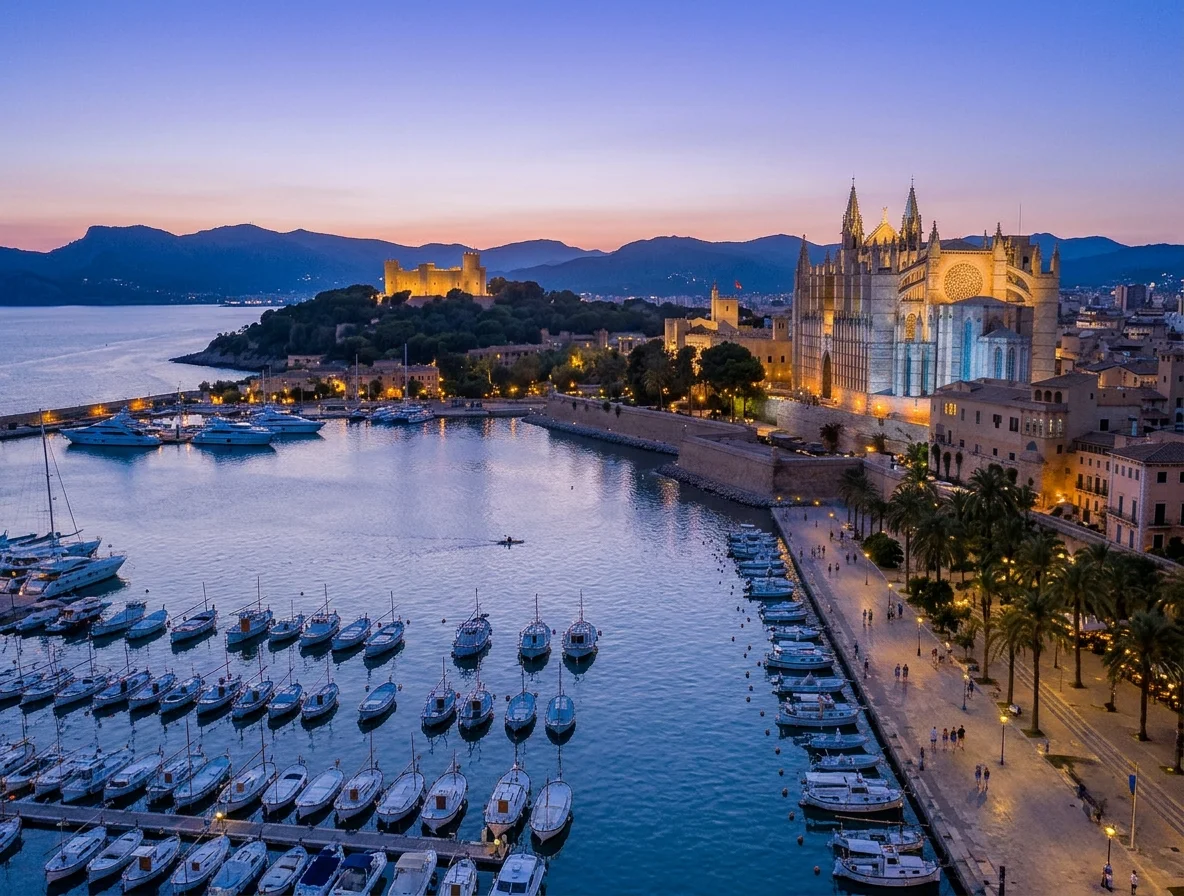
Palma faces the water.
Mornings start quietly here. The fishing boats pull back into the harbor, shutters open along the alleys, and the cathedral catches the first light before the rest of the streets wake up.
Most travelers see Mallorca as one big beach resort. Palma is something else. It is a genuine Mediterranean capital layered with Gothic stone, Arab history, narrow streets that always smell of fresh pastry, and a long seaside promenade where the whole city goes out to walk at sundown.
It isn't a rushed place. It just waits until you slow down enough to match its pace.
Stone Above the Water
La Seu rises directly above the sea. Construction began right after the Christian conquest in 1229 and stretched across centuries, leaving behind a massive sandstone hulk.
Inside, sunlight filters through one of the largest Gothic rose windows in Europe, throwing stained glass patterns across the stone floor on clear mornings. Antoni Gaudí spent time remodeling the interior in the early 1900s, and his suspended iron canopy over the altar still looks wildly untraditional against the heavy medieval columns.
Step behind the cathedral and you are immediately lost in the old town. You'll stumble on the Arab Baths tucked into a quiet courtyard, old noble palaces with overgrown indoor gardens, and lanes so tight neighbours could practically pass coffee cups across from their windows.
Put the map away for an hour. Palma is built for getting slightly lost.
Farther up the hill sits Bellver Castle, a fourteenth century fortress built in a rare perfect circle. The climb is worth it just for the panorama: the entire sweep of the bay, the terracotta rooftops and the mountains, all in a single view.
Pastry, Markets & Long Evenings
Start the morning with an ensaïmada. This light, spiral, sugar dusted pastry is the symbol of the island. Locals dip pieces into coffee, while travelers pack them into awkward round cardboard boxes for the flight home.
Next, head straight for the Mercat de l'Olivar. Fishmongers shout out prices, stalls overflow with local olives and cheeses, and dark red sobrassada hangs from the rafters. Grab a stool at one of the tiny bars inside the market for raw oysters and local white wine, next to locals doing the exact same thing.
For lunch, keep it simple: pa amb oli. Thick country bread rubbed with ripe tomatoes, a heavy pour of olive oil, sea salt, and a slice of cheese or cured ham. It's basic food, but local ingredients just taste different here.
By evening, the Santa Catalina district takes over. Old fishermen's cottages have turned into tiny natural wine bars and bistros, and tables spill out over the sidewalks until late into the night.
Mountains, Monasteries & Hidden Coves
Palma is the gateway to the rest of the island, and the countryside around it easily deserves a day trip.
To the northwest, the Serra de Tramuntana mountains plunge straight into the Mediterranean. Generations of farmers built miles of dry-stone olive terraces into these slopes, and the range is now a UNESCO World Heritage site. Tucked into the mountains is Valldemossa, where Frédéric Chopin and George Sand spent a rainy winter in an old Carthusian monastery. Today it's a maze of stone facades, climbing ivy and quiet squares.
You can also catch the vintage wooden train from central Palma to Sóller. It rattles through a dozen mountain tunnels and orange groves, takes about an hour, and feels like a trip back to another century.
And if you came for the coast, the tiny turquoise coves along the edges of the island are a short drive from the city center.
From Nantes to Palma with Volotea
Palma's airport has direct flights from most European cities, so the island is easy to reach from almost anywhere. One of the most popular routes is Volotea's direct flight from Nantes (NTE) to Palma de Mallorca (PMI), and Volotea runs the most flights on it.
The flight covers roughly 915 kilometers and takes about 1 hour and 45 minutes. In peak season Volotea flies up to twice a day. easyJet, Vueling and Transavia France also run nonstop services, so you have plenty of choice in dates and times.
August gets crowded and expensive. If you want to see Palma when it actually breathes, aim for spring or autumn.
Compare fares from Nantes and other cities on Magelline.flights.
Three Days in Palma
Give the city at least three days. Spend the first wandering the old town and looking up at La Seu. Dedicate the second to the mountains, Valldemossa and the Sóller railway. Save the third for the water and nothing else.
Visit La Seu in the morning, when the sun hits the rose window, and climb to Bellver Castle in the afternoon before the light fades. Start your day with an ensaïmada at an old café, eat fresh seafood at the market stalls for lunch, and have dinner in Santa Catalina. In the evening, walk the seafront promenade alongside the rest of the city.
Skip August if you can. May, September and October bring warm water, quieter streets and a much softer light.
What Palma Leaves Behind
Palma trains you to look at the sea every day. It makes you slow down your meals and walk without checking a destination.
When you finally go home, you'll spend the first few days chasing that morning light, hunting for decent olive oil, and missing the hum of the harbor.
It's a quiet, stubborn sort of city. Once it gets under your skin, it keeps a place for you by the water.